NOSAO streamlines its pallet flows to GSAs with IPP

In a context of increasing volume of fruit and vegetable shipments to supermarkets, NOSAO, a subsidiary of the importers' group KINOBE, is streamlining its handling equipment management by adopting the rental model of wooden pallet specialist IPP. This decision is driven by objectives of cost control and operational simplification.
NOSAO's origins date back to 2014, when KINOBE acquired KISSAO, a specialist in importing exotic fruits and vegetables, from the POMONA group. Two years later, the integration of these activities led to the creation of a dedicated logistics subsidiary, NOSAO, which today manages KISSAO's supply chain, as well as part of the supply chain for two other subsidiaries: NOSIBE (citrus fruits and avocados) and TERRAGAIA (kiwis). Located at the Arnavaux wholesale market in Marseille, NOSAO operates from two temperature-controlled warehouses. It manages between 25,000 and 30,000 tons of produce annually, handling storage, repackaging, and distribution to supermarkets on 80 x 120 cm pallets. At the heart of this organization, pallet management has emerged as a key driver of optimization. “Historically, we used disposable pallets without accurately measuring the costs,” explains Sébastien Coppolani, Director of Operations and Synergies. “When NOSAO was created, we sought to better control our expenses. The analysis showed that the 80 x 120 rental model offered by IPP was more competitive than disposable pallets.”
Dispute resolution
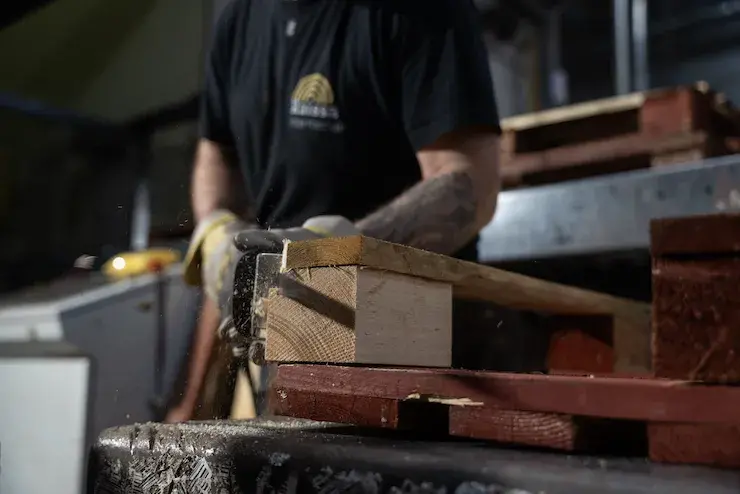
Beyond the economic aspect, the reliability of the pallet support proved crucial in an environment constrained by the demands of large retailers. Present in almost all major chains, NOSAO gradually measured the direct impact of pallet quality on operational efficiency. "We regularly experienced breakages with lost pallets. The robustness of IPP's assets means that we no longer have any disputes with our clients related to pallets," emphasizes Sébastien Coppolani. The wooden pallets are collected after delivery, then integrated into a control, inspection, and repair circuit before being put back into circulation, ensuring the continuity of the pool.
Simplified management
Beyond the physical support, the relationship with IPP is based on a simplified and industrialized management model. "The Euro pallet is too cumbersome to manage. With IPP, we submit a file to declare our movements, and their teams take care of replenishing our pallet supply according to our needs," explains the director. This system allows NOSAO to manage an annual volume of 18,000 to 20,000 pallet movements.
Dans la même catégorie

Social Commerce: A Growing Phenomenon - Colissimo Reveals the Latest Figures in France
La Poste and Aroma-Zone launch an experiment for the return of reusable delivery packaging